Coaching in Mathematics Education aims to develop the foundational elements of effective mathematics coaching programs and detail a set of essential actions that must be taken by all stakeholders to establish and maintain such a program.
This book shares strategies to work with adult learners and teams as well as protocols and tools for using evidence of student learning through assessment data and lesson design or instructional rounds.
This one-stop, comprehensive toolkit for improving mathematics instruction and learning is designed for busy math coaches and teacher leaders who often have to rely on their own competencies. Using the Leading for Mathematical Proficiency Framework, the authors position student outcomes as the focus of all professional work and connect the Eight Mathematical Practices for students with NCTM's Eight Effective Teaching Practices to help you guide teachers toward growing mathematics proficiency in their classrooms.
The Art of Coaching offers all the tools necessary for professionals who coach educators. It demystifies the process of coaching with easy-to-apply, immediately actionable ideas. Elena Aguilar offers a model for transformational coaching designed for new and veteran coaches, teacher leaders, mentors, principals, and other administrators.
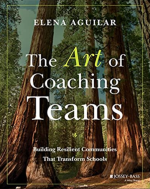
Team development is an art form, and The Art of Coaching Teams is your how-to-guide to doing it effectively. You'll learn the administrative tasks that keep your team on track, and you'll gain access to a wealth of downloadable tools that simplify the process. You'll also explore what it means to be the kind of leader that can bring people together to accomplish difficult tasks. You'll find practical suggestions, tools, and clear instructions for the logistics of team development as well as for building trust, developing healthy communication, and managing conflict.
Read how Kristianne Trevorrow, Frederick County Public Schools, advanced in her leadership growth by using coach-like conversations with teachers as they engaged in a book study and the implementation of its suggestions. The effect of these conversations on community building and productive student-led conversations in classrooms is described.
Oftentimes, providing professional development for teachers is part of a math resource teacher duties. Read a story from Michelle Ziegler, Mathematics Resource Teacher, Carroll County Public Schools, on how Incorporating this professional development into instructional planning processes is both possible and productive, requiring a range of strategies employed in a continuous, improvement driven manner.
This year, we were given the task of pulling two 5th grade math classrooms' scores up from 29% proficient. Here from Lourdes Goodnight District Math Program Administrator and Kat Bir, Elementary Math Coach, Pulaski County Special School District, how they created a push-in plan with the mentality of "Whatever it takes", and they did just that! They created an action plan that allowed for planning with the teacher, a short mini-lesson, and time for small group lessons with no more than 4 students. Each group's lesson was individualized for their learning and focused on closing their achievement gap. IT WORKED!
Amanda Butler, Elementary Mathematics Instructional Facilitator, Pulaski County Special School District worked one-on-one with a traditional, direct-instruction style teacher who showed no growth in her students' learning. Through coaching, the teacher progressed to trying a weekly activity, to a daily activity, to grouping, and strong formative assessment.
A look at a first year facilitator, Stacie Mathis, Math and Science Instructional Facilitator, Rogers Public Schools, and her experiences in building relationships in her new school.
Haylee Pierce, Math Facilitator, Rogers Public Schools shares that schools that utilize the professional learning community process to achieve shared vision for mathematics education within their setting can use the process to deepen teachers' content knowledge and increase student achievement.